
Reviewed · HISTORICAL TOURS
Aberdeen’s Ancient Heritage and Folklore
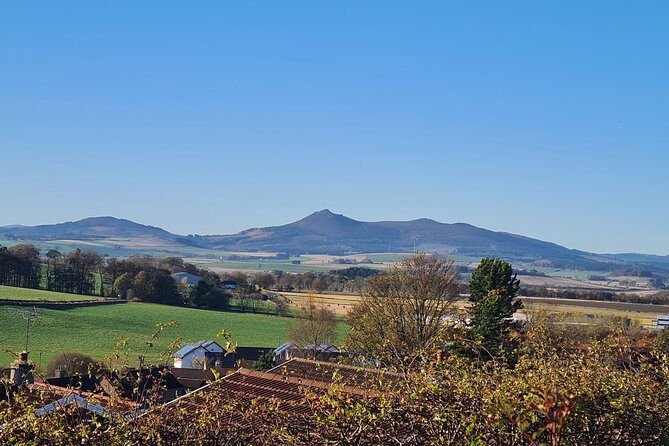
The most unusual part of this Aberdeen day tour is how quickly it leaves the city behind. You spend the day among old hillforts, standing stones, castle ruins, and quiet country roads, tracing the Picts through places that rarely make a standard Scotland itinerary. Barra Hill and Dunnideer Hillfort give you a real feel for defensive settlements built high above the surrounding land.
I like the small group limit of seven, and I like that Jacqueline can shape the day around your interests when time and conditions allow. Past outings have included extra stops such as a sea cliff with seabirds, a whisky brewery, and a castle. The main consideration is the walking: several sites involve steep or uneven hill sections, and lunch is not included.
Key points to know before you book
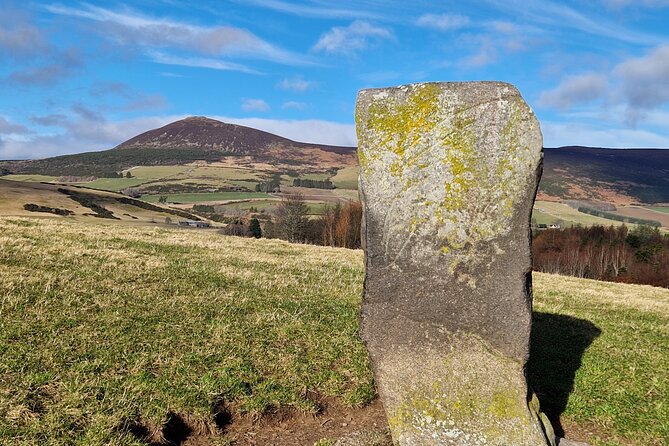
- Pictish sites away from the usual routes: Visit hillforts, carved stones, and ancient circles in rural Aberdeenshire.
- A genuinely small group: The tour takes no more than seven people, allowing more conversation and flexibility.
- Jacqueline’s personal approach: She can adjust parts of the day to suit your interests, subject to time and conditions.
- Strong folklore element: The day connects archaeological sites with stories, beliefs, symbols, and local tradition.
- Moderate physical effort: Expect short walks and some steep sections, especially at the hillforts.
- Seven and a half hours outside Aberdeen: The tour begins at 9:00 a.m. by the William Wallace Statue and returns there.
Why this Aberdeen tour feels different
Aberdeen is often treated as a gateway to castles, whisky country, and the Cairngorms. This outing takes a quieter route. Instead of spending the day at one major attraction, you visit a chain of lesser-known places that show how people used these hills and valleys over thousands of years.
The focus is the Picts, the early inhabitants of northeast Scotland. Their written story is limited, so much of what you learn comes from earthworks, carved stones, burial monuments, and later traditions. That makes the guide especially important. A bank in the grass can look like an ordinary rise until you understand it as part of a defensive ring or settlement.
I like this approach because it does not reduce ancient Scotland to a parade of dramatic ruins. Some stops are small and restrained. Their value comes from the setting and from learning how archaeologists read the ground.
The folklore adds another layer. You hear how ancient beliefs may have shaped monuments, how Pictish symbols are interpreted, and how later Scottish kings changed the culture of the region. The day is less about ticking off famous sights and more about learning how to notice traces that are easy to miss.
A few more days out from Scotland worth a look
- Old Town Walking Tour History and Tales in Edinburgh
★ 5.0 · 2,168 reviews - Old Town Historical and Underground Tour
★ 5.0 · 1,574 reviews - Multi-Sensory Small-Group Historic Vaults Tour in Edinburgh
★ 4.5 · 1,384 reviews
Barra Hill and the first view of Pictish life
The first stop is Barra Hill, also described as Barry Hill, a hillfort site near Aberdeen. Hillforts were placed on higher ground and often protected by wooden or stone enclosures. These were not simply military positions. They could also contain homes, work areas, and communities.
At Barra, you begin to see how early settlements were organized. Much of the original construction has disappeared, leaving foundations, banks, and the shape of the hill to explain what once stood there. That may sound less dramatic than a complete castle, but it is exactly why a guide helps.
The stop lasts about an hour, giving you time to walk, look out across the countryside, and discuss how archaeological evidence fills in missing pieces. You should expect open ground rather than a polished visitor attraction. There may be no grand entrance, museum, or row of explanatory signs.
That is also the appeal. You are not being moved through a staged historical display. You are using the place itself as the evidence.
The walk requires a reasonable level of fitness. Hillforts were built for strategic reasons, not for easy access. Walking poles are worth bringing if you use them. The operator may have some available to borrow, but it is better not to rely on that.
Dunnideer Hillfort, castle ruins, and concentric defenses
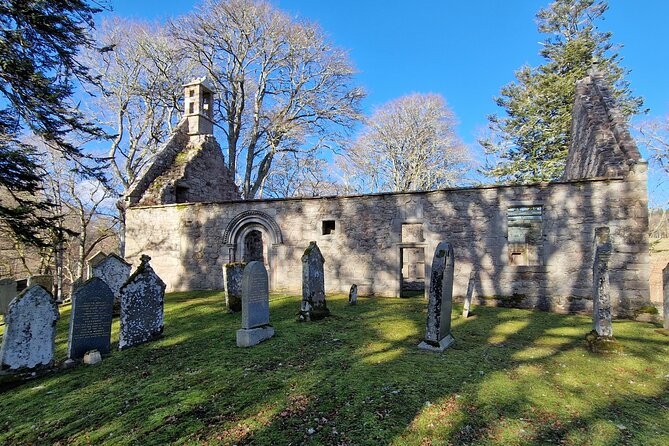
At Dunnideer, the walk up the low hill is short, but the ground can still be uneven. From the route, you see the remains of Dunnideer Castle, a tower house built around 1260. It used some of the stone from an earlier vitrified hillfort on the same site.
The hillfort is especially interesting because its defenses appear as at least five concentric rings. From below or from the top, the banks and ditches are easier to understand than they might be on a flat site. You can trace the layers of protection and consider the work needed to build them.
The castle ruins add a later chapter. The location was reused long after the Picts, showing how useful high ground remained through different periods of Scottish history. You are not looking at a single moment frozen in place. You are seeing one site adapted by people with different needs.
Nearby are the remaining stones of Dunnideer Stone Circle. Only part of the original monument survives, but the stones add to the character of the hill. The visit is brief, about 30 minutes, so this stop works best as a compact lesson in reuse: prehistoric monument, early fortification, and medieval tower house in one setting.
If you want long visits inside intact buildings, this will not fill that need. The castle is a ruin, and the circle is fragmentary. The reward is the relationship between the remains and the ground around them.
Rhynie and the scale of the Pictish stronghold
Rhynie is one of the day’s most important stops. The area was a Pictish stronghold in northeast Scotland, and nearby Tap O’Noth has one of Scotland’s largest hillforts. The hilltop settlement may once have supported more than 5,000 people, a remarkable figure for a post-Roman community.
You do not climb Tap O’Noth as part of the stated stop, but the discussion places the local sites in a much bigger setting. Rhynie was not an isolated rural settlement with no wider connections. Evidence suggests trade and contact that reached far beyond the northeast.
The Crawstane, a lone standing stone, was once at the center of a settlement. The tour connects it with trade across the Mediterranean and considerable wealth. That is a useful corrective to the idea that Pictish life was small-scale or cut off from the wider world.
You also examine a collection of Pictish carved stones and learn how symbols and designs are read. Their meanings are not always certain, and that uncertainty is part of the story. A good explanation should separate what the evidence shows from what people think it may mean.
This is where folklore and history meet most clearly. You hear about the King of the Scots and the cultural changes that helped bring about the decline of the Picts. The subject is not presented as a simple disappearance. The Picts became part of the people and political culture of Alba, and their legacy continued in new forms.
Allow about an hour here. It is enough time for the carved stones, the surrounding sites, and questions without making the day feel rushed.
Same base, a completely different day out:
- The World Famous Underground Ghost Tour
★ 4.5 · 9,272 reviews - Underground Vaults Walking Tour in Edinburgh Old Town
★ 4.5 · 8,506 reviews - Loch Ness, Scottish Highlands, Glencoe and Pitlochry Tour
★ 5.0 · 6,854 reviews - Loch Ness & Highlands Small-Group Tour from Edinburgh with Cruise
★ 4.5 · 6,022 reviews
Bellabeg and a practical lunch break
The lunch stop is at Bellabeg, near the foot of the Doune of Invernochty motte and bailey castle. It is a short break of about 45 minutes, so plan ahead.
Lunch is not part of the $135.49 price. You can buy food in Insch or Bellabeg, or bring your own picnic. A cooler is provided, which is useful if you are carrying sandwiches, fruit, drinks, or other food that needs to stay chilled.
The setting offers a chance to slow down. You can picnic by the river or take a short walk through the country lanes. The nearby castle earthworks provide a historical backdrop, but this is primarily a rest stop rather than a full castle visit.
I would bring lunch from Aberdeen if you prefer a particular meal or need to manage dietary requirements. Buying food locally may be more convenient, but the tour information does not promise a specific café, menu, or opening time.
This break also helps explain the pace of the day. Seven and a half hours can feel long if every stop is a lecture and a climb. A simple picnic gives your feet a rest and lets you enjoy the countryside without another formal activity.
Tomnaverie and northeast Scotland’s recumbent circles
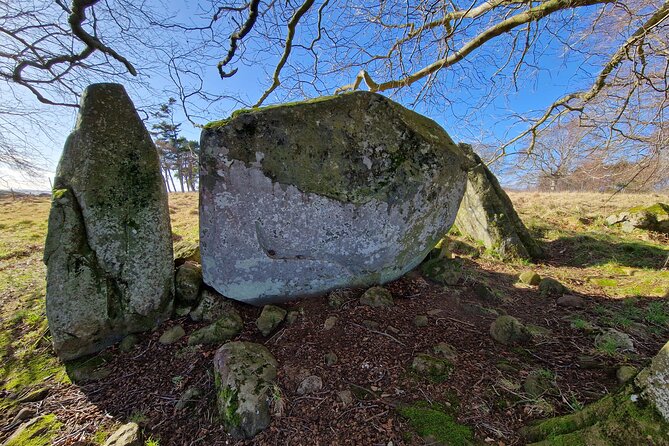
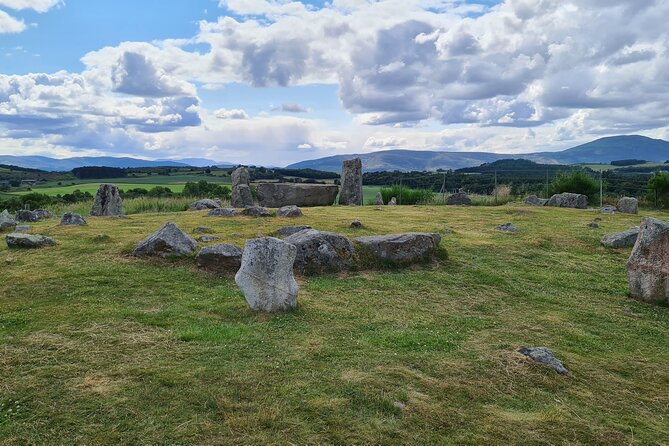
The final scheduled site is Tomnaverie Stone Circle, about 30 minutes from Bellabeg. This is a recumbent stone circle, a type found only in northeast Scotland.
The defining feature is a large stone laid on its side, flanked by two upright stones. Other standing stones complete the circle. The arrangement is distinctive enough that you can understand why it has attracted so many theories about its purpose.
Close by is a burial cairn dating to around 4,500 years ago. The exact meaning of these monuments is not known, so the visit is less about receiving one fixed answer and more about considering the possible roles of burial, ceremony, astronomy, or community identity.
The view is a major part of the stop. Tomnaverie is not just an object to inspect from a few feet away. Its location helps you think about why people selected a particular site and how the monument related to the surrounding area.
Thirty minutes is a sensible length for this visit. You get the main explanation and time to look around, but the tour does not pretend that a small stone circle requires hours. Bring a jacket even in mild weather, since the sites are exposed and the day depends on suitable conditions.
What the guide adds to the experience
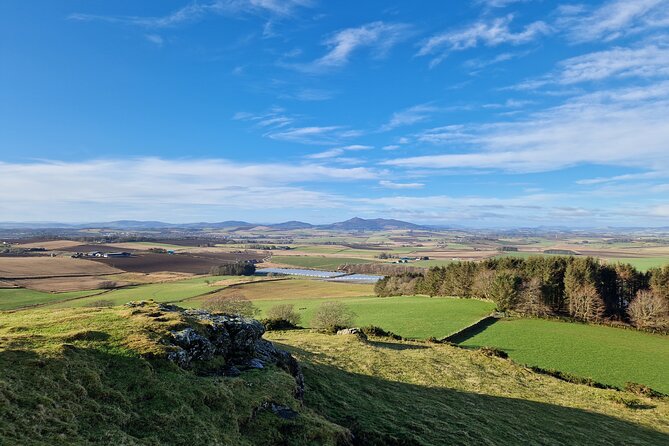
Jacqueline is the guide named for this experience, and the strongest feature of the day is her ability to make it personal. A small group means you can ask questions without competing with a coachload of people. If you are especially interested in folklore, carved symbols, archaeology, castles, or local places, you have a better chance of shaping the conversation.
One solo booking became a particularly flexible day, with the route adjusted around personal interests. Other possible additions have included a cliff overlooking the sea, seabirds such as seagulls and puffins, a whisky brewery, and a castle. These extras are not guaranteed parts of the published route, so treat them as examples of flexibility rather than promised stops.
That distinction matters. You should book this tour for the scheduled Pictish and folklore experience first. Any extra stop depends on the day’s timing, weather, road conditions, and what you request.
The tour includes WiFi on board. That is a useful comfort during the longer drives between rural sites, though the real value is having a small vehicle and a guide who can talk with you along the way.
Price, group size, and what the day is worth
At $135.49 per person, this is not the cheapest way to see the Aberdeen area. The value depends on what you want from a day out.
You are paying for roughly seven and a half hours, transport between scattered sites, a small group capped at seven, guiding, and access to a route that would be awkward to organize without a car. Several locations are not the sort of places you can efficiently connect by public transportation in one day.
The small group changes the feel of the experience. You have more room to ask questions, and the guide can respond to your interests. For a solo visitor or a couple who prefers conversation over a fixed script, that can justify the price.
Lunch is extra, and the scheduled admission charges are listed as free. You should also allow for food and any personal purchases if an optional whisky stop or other added visit becomes part of your day.
The tour is booked an average of 64 days in advance, which suggests that planning ahead is wise. It is especially sensible to reserve early if your Aberdeen stay is short or you need a particular date.
Walking, weather, and who should choose it
You need moderate physical fitness for this outing. It is not described as a strenuous hike, but the hill sections can be steep, and the ground at ancient sites is not always smooth. Walking poles may help.
The operator says the tour is not recommended for people with mobility issues, but some adjustments can be made. You are not required to take part in every walk, and it is best to contact Grampian Escapes Tours Ltd before booking if you have concerns.
Service animals are allowed, and the meeting point is near public transportation. The tour starts at 9:00 a.m. at the William Wallace Statue on Union Terrace in Aberdeen and ends back there.
Good weather is required. If poor weather forces a cancellation, you are offered another date or a full refund. You can also cancel for a full refund up to 24 hours before the start time. Last-minute changes or cancellations inside that window are not refunded.
This tour suits you best if you enjoy open-air history, archaeology, folklore, and quiet rural places. It is less suitable if you want grand interiors, a relaxed bus ride with almost no walking, or a predictable list of major tourist attractions.
Should you book Aberdeen’s Ancient Heritage and Folklore?
I would book this if you have already seen central Aberdeen and want a day focused on the older, less obvious side of the region. The Pictish sites, carved stones, recumbent circle, and local stories give you a strong sense of northeast Scotland beyond castles and city museums.
The best reason to choose it is the combination of small-group attention and unusual stops. Jacqueline’s flexible style can make the day feel tailored, especially if you have a clear interest in folklore, ancient monuments, or local culture.
Think twice if steep ground is a problem, if you do not want to arrange your own lunch, or if uncertain weather could disrupt your plans. For everyone else, this is a thoughtful and unusual full-day outing that trades famous sights for places with more room to think.
FAQ
Where does the tour start and finish?
It starts at 9:00 a.m. at the William Wallace Statue on Union Terrace in Aberdeen. The activity ends back at the same meeting point.
How long does the tour last?
The experience lasts approximately 7 hours and 30 minutes.
What is included in the price?
WiFi on board is included. Admission at the listed stops is free, but lunch is not included.
Do I need to bring lunch?
You can buy lunch in Insch or Bellabeg, or bring a picnic. A cooler is provided.
Is the tour suitable for people with mobility issues?
The tour requires moderate physical fitness and is not recommended for people with mobility issues. Some adjustments can be made, and you are not expected to take part in every walk. Contact the operator before booking if you are unsure.
What happens if the weather is poor?
The experience requires good weather. If it is canceled because of poor weather, you are offered a different date or a full refund. You can also cancel up to 24 hours before the start time for a full refund.
Just added around Scotland
- River Tubing in Perthshire★ 5.0 · 65 reviews
- White Water Rafting Half-Day Trip on the River Tummel★ 5.0 · 27 reviews
- River Tay White Water Rafting★ 5.0 · 32 reviews
- Guided Tour in Aberfeldy Distillery with Connoisseur Experience★ 5.0 · 25 reviews
- Canyoning Half-Day Trip at Keltneyburn from Aberfeldy★ 5.0 · 45 reviews
- Stand Up Paddle Boarding in Aberfeldy★ 5.0 · 12 reviews
- Fort William Evening Cruise★ 4.5 · 43 reviews
- Ben Nevis Guided walks★ 5.0 · 247 reviews
Historical Tours, compared.

Old Town Walking Tour History and Tales in Edinburgh
Read our review →
Multi-Sensory Small-Group Historic Vaults Tour in Edinburgh
Read our review →
Edinburgh Old Town: Historical Guided Walking Tour
Read our review →

St Andrews Old Course History Tour, for the Golfer
Read our review →Browse the lists this tour appears in