
Reviewed · ST ANDREWS AND FIFE TOURS
St Andrews Old Course History Tour, for the Golfer
The best part of this St Andrews walk is that you cross the Old Course fairway, rather than only viewing it from a roadside. A local guide, often Richard, connects the famous holes with stories about old caddies, course design, major championships, and the town’s long link to golf.
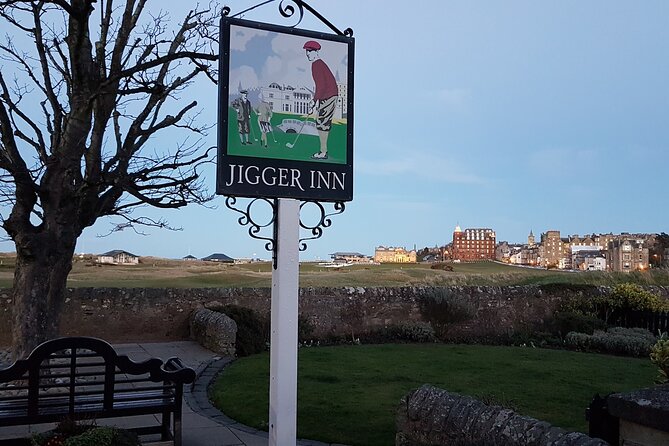
I like the small group, capped at 15 people, and the chance to finish near the Jigger Inn by the Road Hole. The $25 price also buys a useful introduction for a first visit. The main drawback is the guide’s fast delivery, so a strong command of English is essential.
Key points to know before you book
- A retired caddie may lead the walk: Richard’s first-hand experience adds practical stories that go beyond dates and famous names.
- You walk beside the first and 18th holes: The tour explains why these two fairways sit together and how the course grew into its modern form.
- Swilcan Bridge is the photo highlight: Professionally taken photos are included, except on tournament days.
- The history covers more than golf: You begin with St Andrews town history and the 1123 Links charter before moving into the game itself.
- The pace is short but information-heavy: The route lasts about 75 minutes, with frequent stops, but some guides speak quickly.
- Dress for changing weather: The links are open and exposed, and one cold-weather outing turned sharply chilly when conditions changed.
Why this short walk matters at St Andrews
St Andrews can feel like a pilgrimage site for golfers. The Old Course is familiar from television, photographs, and major tournaments, yet it is still a working public course woven into the town. This tour helps you understand what you are looking at instead of simply taking a quick photo and moving on.
You start outside Hotel du Vin on The Scores. The meeting point is easy to place in central St Andrews, but public tours do not wait for late arrivals, so I would arrive early. The first few minutes set the town in context, including the old Links charter dated to 1123.
That opening is useful for non-golfers. You are not thrown straight into talk of bunkers and birdies. Instead, you get a short explanation of how St Andrews developed and why the links became such an important part of the town.
The group is shared and limited to 15 people. That is large enough to have a lively mix of golfers and curious companions, but small enough for the guide to keep moving without a microphone. On some outings, ear buds have been provided, which can help, though you should still expect a live walking talk rather than a recorded tour.
Other coastal days from Scotland:
- St Andrews & the Fishing Villages of Fife Small-Group Day Tour from Edinburgh
★ 4.5 · 1,973 reviews - St Andrews Must-Sees Daily Walking Tour (11am & 2pm)
★ 5.0 · 478 reviews - Edinburgh: St Andrews & The Fishing Villages of Fife
★ 4.5 · 431 reviews
From stick and ball to the Home of Golf

At The Links, the guide traces early forms of golf from 13th-century stick-and-ball games in the Low Countries through Edinburgh in 1744 and on to St Andrews. This section gives you the basic answer to the question every first-time visitor asks: why is St Andrews called the Home of Golf?
The value here is the connection between the broad story of the game and the ground beneath your feet. You learn that golf did not appear fully formed on this coast. It changed over time, and St Andrews helped shape the rules, course layout, and traditions that golfers recognize today.
I especially like this part for mixed groups. A golfer gets useful context, while someone who has never held a club can still follow the story. The walk does not assume that everyone knows the difference between a tee, green, bunker, and fairway.
The information comes quickly, though. One person described the amount of history packed into the short tour as staggering, while others found the speed difficult. If English is not your first language, this is an important limitation. The tour requires a fluent command of English, and translating or asking the guide to slow down is not considered workable for the format.
The Royal and Ancient and the making of the Old Course
The stop near the Royal and Ancient Golf Club shifts the focus from the general history of golf to the Old Course itself. You hear how the course changed as the game developed, along with the origins of familiar features such as fairways and bunkers.
This is also where stories about Old Tom Morris and the old caddie shack bring the setting to life. The guide links course development to real people and memorable moments, rather than giving you a dry list of alterations.
A local guide with caddie experience can make a difference here. Richard is often praised for knowing the course from practical experience and for using humor to keep the walk moving. His stories reportedly include both major golfing moments and his own time around the Old Course.
The tradeoff is that his style may feel more like a prepared performance than a loose conversation. Some people find the strong pace and clear agenda efficient. Others want more time for questions and feel the guide moves on before the group can interrupt. You should expect a structured talk, not a private seminar.
Grannie Clark’s Wynd and the changing course
Grannie Clark’s Wynd is one of the most useful stops for understanding how the Old Course became the course you see today. The talk covers the Open Championship, the Dunhill Cup, and the changes from 12 holes to 10 and finally 18.
That development explains why the Old Course can feel unusual compared with modern courses. The outward and inward journeys share the same broad area, and the first and 18th holes sit side by side. You begin to see the course as an old route that adapted over time, not a design created all at once from a blank plan.
You also hear about important sites around the 18-hole layout. For a golfer, this gives extra meaning to familiar tournament scenes. For a non-golfer, it helps turn a large open area into a sequence of places and stories.
The route is not a round of golf. You do not play the holes, and you should not expect access to restricted areas. You walk in places open to the public while respecting play and following instructions from course marshals. On quieter days, the group may cross the fairway, but tournament conditions can limit access.
A few more days out from Scotland worth a look
- Old Town Walking Tour History and Tales in Edinburgh
★ 5.0 · 2,168 reviews - Old Town Historical and Underground Tour
★ 5.0 · 1,574 reviews - Multi-Sensory Small-Group Historic Vaults Tour in Edinburgh
★ 4.5 · 1,384 reviews - Edinburgh Old Town: Historical Guided Walking Tour
★ 5.0 · 1,016 reviews
The first and 18th fairways at Rusacks
Near Rusacks St Andrews, the tour looks at the first and 18th fairways and the way farming once shared space with golf. You also hear about the hotel, the Mannings, the original first tee, and the 18th hole.
This is one of the most visual sections of the walk. You can look across the famous opening and closing stretch and picture how different the area must have been before the modern hotel frontage and championship crowds. The guide also explains how early caddies and local players shaped the use of the course.
The most unusual story here concerns ladies using the early putting area. According to the tour, this helped lead Old Tom Morris to create the world’s first putting green. It is a small detail, but it shows how ordinary use of the links could influence golf’s development.
I like that the tour does not treat golf as a story made only by champions. Farmers, caddies, hotel owners, and local players all appear in the account. That wider view gives the course a stronger sense of place.
You should also pay attention to the walking surface. The route is not suitable for strollers, walking frames, mobility scooters, or crutches, and there is nowhere to leave those items or golf clubs during the tour. Anyone with a new knee or hip replacement, a sprained ankle, or similar limits should think carefully before booking.
Swilcan Bridge and the essential photograph
Swilcan Bridge is the emotional high point for many people on the route. The small stone bridge has become one of golf’s most recognized landmarks, and the tour includes professionally taken photographs there when no tournament is taking place.
This is more than a quick stop for a snapshot. The bridge links the first and 18th fairways, so the guide can explain its place in the layout while you stand on a spot known from countless championship images. A professional photo also saves you from relying on a stranger’s timing or balancing a phone on a wall.
Tournament days are the key exception. The tour information specifically excludes Dunhill Cup and Open Championship days from the bridge photo opportunity. Access can also change when play is under way, so do not book this solely for a guaranteed bridge pose during a major event.
The guide generally keeps the photo stop moving rather than spending the whole tour on pictures. That is a strength if you want useful context and a steady pace. If you want a long personal photo session, you may find the stop brief.
The Road Hole and a sensible finish at the Jigger Inn
The final section takes you toward the Road Hole, the 17th green, and the Old Course Jigger Inn. This is a fitting end because the 17th is one of the course’s most discussed holes, with the railway boundary, tight green, and famous tournament moments forming part of its reputation.
You hear about dramatic golfing episodes at the Road Hole, then finish close to the Jigger Inn by the 17th fairway. Food and drinks are not included, but the location gives you an easy next step. One guide helped a group find fish and chips there, and the setting makes it a natural place to continue the afternoon.
The end point is described near the Road Hole and Jigger Inn, while Swilcan Bridge is also listed as an endpoint in the meeting details. Treat the walking route as finishing in the Old Course area near the 17th, and confirm the exact final position with the guide if you need a precise pickup point.
This ending works well because you are not rushed straight back to the starting point. You can sit down, look over the fairway, and sort through the stories you have just heard. For a golfer, it is a chance to study one of the most famous holes. For a companion, it is simply a pleasant place to rest after a short walk.
What $25 buys you
At $25 per person, this is a modest cost for a 75-minute introduction to one of the world’s best-known golf settings. You are paying for a local guide, a planned route, course history, and professional photos at Swilcan Bridge when conditions allow.
The value is strongest if this is your first visit to St Andrews. You save time researching the course and gain a framework for exploring it on your own afterward. The tour also helps you see details you could easily miss, such as the old route between holes, the role of caddies, and the relationship between the town and the links.
The value is less clear for someone who has already studied the Old Course closely or simply wants unrestricted time for photographs. Much of the area can be viewed publicly when you do not interrupt play, and the tour does not provide a playing opportunity.
The group limit of 15 keeps the price low while allowing some personal attention. It is not private, and the guide may need to keep to a set talk to cover all seven stops. A private St Andrews Old Course history tour is available separately if you want a more flexible format.
Timing, weather, and who should book
The tour is scheduled for about one hour and 15 minutes. It is a walking activity with frequent stops, and the pace is generally manageable for people with moderate fitness. It is not suitable for children under five, and everyone needs enough English to follow a fast spoken presentation.
Weather matters. The experience requires good conditions, and exposed links weather can change quickly. Bring warm layers and prepare for wind or cold even if St Andrews looks pleasant when you leave the hotel.
I would book early if your schedule is fixed. The experience is booked an average of 61 days ahead, which suggests that popular dates can fill well before arrival. You receive confirmation at booking, and mobile tickets are accepted.
Free cancellation is available up to 24 hours before the local start time. A cancellation inside that window is not refunded. If poor weather or too few bookings cause the tour to be canceled, you are offered another date, another experience, or a full refund.
Should you book the St Andrews Old Course History Tour?
I would book this for a golfer who wants context, stories, and the chance to walk across part of the Old Course without paying for a round. It is also a good choice for a non-golfing partner because the town history, farming links, caddies, and course development give the walk more range than a technical golf talk.
Book it especially if you value a local guide and want a professional Swilcan Bridge photo. Richard’s caddie background, humor, and first-hand stories can make the course feel much more real.
Think twice if you need a slow, translated presentation, extended question time, or step-free access. The tour moves at a brisk speaking pace, public play may limit what you can cross, and the open links can be cold. For most first-time visitors who can walk comfortably and follow English well, the low price and strong sense of place make this a sound addition to a St Andrews day.
FAQ
How long does the St Andrews Old Course History Tour last?
The tour lasts approximately one hour and 15 minutes.
Where does the tour begin?
You meet Richard outside Hotel du Vin St Andrews at 40 The Scores, St Andrews KY16 9AS.
Where does the tour finish?
The walking route finishes near the Road Hole, the 17th hole, close to the Old Course Jigger Inn. Swilcan Bridge is also listed in the meeting information, so confirm the exact final position with the guide if needed.
Is the Swilcan Bridge photo included?
Yes. Professionally taken photos at Swilcan Bridge are included, except on tournament days such as the Dunhill Cup or Open Championship.
How many people can join the tour?
The shared tour has a maximum of 15 participants.
Is the tour suitable for non-golfers?
Yes. The route includes St Andrews town history, the origins of golf, local stories, and the development of the course, so you do not need to be a golfer to follow it.
Can I cancel for a full refund?
You can cancel at least 24 hours before the local start time for a full refund. Changes or cancellations made less than 24 hours before the start are not accepted for a refund.
Just added around Scotland
- Aberdeen’s Ancient Heritage and Folklore★ 5.0 · 4 reviews
- River Tubing in Perthshire★ 5.0 · 65 reviews
- White Water Rafting Half-Day Trip on the River Tummel★ 5.0 · 27 reviews
- River Tay White Water Rafting★ 5.0 · 32 reviews
- Scottish Whisky Distillery Tour★ 4.5 · 28 reviews
- Stirling Castle, Trossachs, Loch Lomond and Whisky Tour★ 4.0 · 13 reviews
- Private Inverness Walking Tour★ 5.0 · 11 reviews
- Private Walking Tour in Inverness with a Local★ 5.0 · 23 reviews
St Andrews and Fife Tours, compared.

St Andrews & the Fishing Villages of Fife Small-Group Day Tour from Edinburgh
Read our review →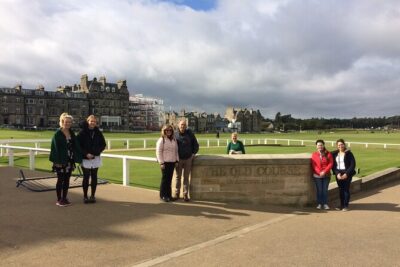
St Andrews Must-Sees Daily Walking Tour (11am & 2pm)
Read our review →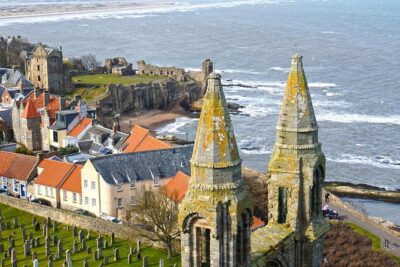
St Andrews & Cliffs and Dunnottar Castle in Spanish.
Read our review →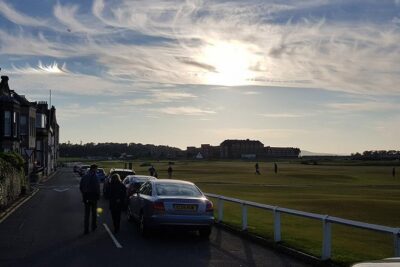
St Andrews Tours: Town, Golf and Old Course History
Read our review →Browse the lists this tour appears in